
Book Formatting and Publishing: Preparing Your Manuscript for Publication
Book formatting and publishing are essential steps in preparing a manuscript for professional presentation and distribution. Once your content has been written, reviewed, and edited, it needs to be properly structured for its intended format, whether you’re preparing a print book, an eBook, or a digital publication.
This is where Formatting and publishing become important.
Formatting determines how content is presented to readers. It can include headings, paragraphs, page layout, spacing, typography, citations, references, tables, chapter structure, and other presentation elements. Publishing is the next step of preparing the completed material for its intended destination.
A document may contain excellent information, but poor formatting can make it difficult to read or present professionally. Similarly, publishing requirements can vary depending on the type of content and where it will be used. A research paper may follow a formal academic style, while a book requires a different layout and structure.
Pretty Writer provides formatting and publishing support for both existing content and content developed through its writing services. The process is designed to understand the client’s requirements, apply the appropriate formatting style, and prepare the content for publishing.
What Is Formatting and Publishing?
Formatting and publishing are two important stages in preparing written content for its final use.
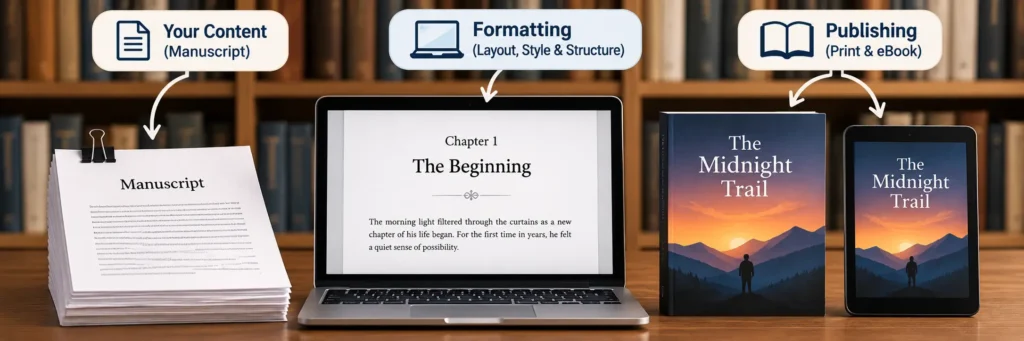
Formatting focuses on how the content looks and is organized. It ensures that the document follows the appropriate presentation standards and is easy for the intended audience to navigate.
Publishing involves preparing the completed content for release or distribution according to the required format.
Formatting may include:
- Page layout
- Headings and subheadings
- Font and typography
- Paragraph spacing
- Margins
- Page numbers
- Chapter structure
- Citations and references
- Tables and lists
- Overall document consistency
Publishing can then involve preparing the formatted material according to its intended publishing requirements.
Why Professional Formatting Matters
Good formatting improves readability and gives content a more organized appearance.
Imagine reading a long document where headings are inconsistent, paragraphs are poorly spaced, page numbers are missing, and references follow different styles. Even if the information is accurate, the presentation can make the document difficult to use.
Professional formatting helps create consistency.
- Easier to read
- Easier to navigate
- More organized
- More professional
- More suitable for its intended audience
- Better prepared for publication
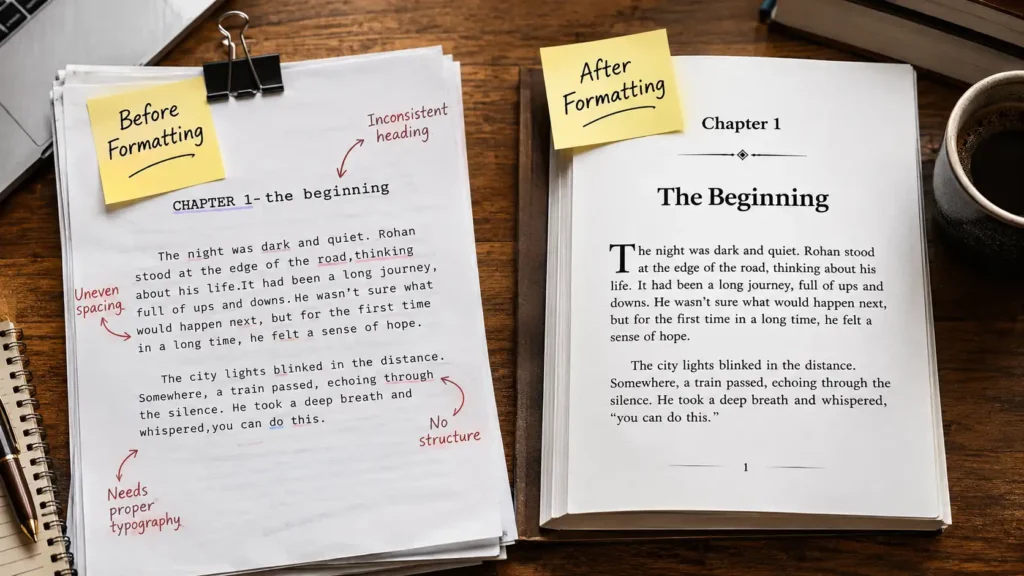
The appropriate formatting style depends on the type of content and its purpose.
Formatting Existing Content
Formatting services are not only useful for newly written material.
Many users already have content that needs to be reorganized or presented in a more professional format.
An existing document may need:
- Consistent headings
- Improved spacing
- Correct page layout
- Standardized references
- Better paragraph structure
- Chapter organization
- Consistent typography
- Improved overall presentation
Pretty Writer can help users format existing content according to their requirements.
This can be particularly useful when the content has already been written but the author does not want to spend additional time handling technical formatting details.
Formatting Newly Written Content
Formatting can also be part of the writing process itself.
When content is developed through a professional writing service, the final material may need to be formatted before delivery or publication.
Pretty Writer states that its writing process passes through final formatting before publishing.
This creates a connection between writing and presentation rather than treating formatting as completely separate from the final production stage.
Understanding Different Formatting Styles
Different types of documents follow different formatting conventions.
For example, academic content may require a specific citation and reference style, while a business document may use a more formal but visually flexible format.
Pretty Writer’s formatting support includes styles such as APA as well as formal and informal formatting requirements.
The key is to understand the purpose of the document before selecting or applying a formatting structure.
APA Formatting
Academic and research-based documents may require APA formatting.
Depending on the project requirements, this can involve:
- Citations
- Reference lists
- Headings
- Page numbers
- Document structure
- Consistent presentation of sources
Correct formatting helps make an academic document easier to evaluate and navigate.
When working with a specific style, consistency throughout the document is important.
Formal Formatting
Formal documents generally require a professional and organized presentation.
Examples may include:
- Reports
- Business documents
- Research material
- Proposals
- Professional manuscripts
Formal formatting can focus on clear headings, consistent spacing, appropriate typography, logical sections, and an organized page structure.
The exact requirements should be determined by the intended purpose and audience.
Informal Formatting
Not every document needs a formal academic or professional presentation.
Some content may require a more relaxed format while still maintaining readability and consistency.
Informal formatting can be appropriate for certain articles, personal writing projects, creative content, or other documents where strict academic formatting is unnecessary.
The objective is still to make the material easy to read and visually organized.
Formatting Books and Long-Form Content
Books require additional attention because of their length and structure.
- Title pages
- Copyright information
- Contents pages
- Chapters
- Subheadings
- Page numbers
- Headers and footers
- References
- Appendices
- Other front or back matter
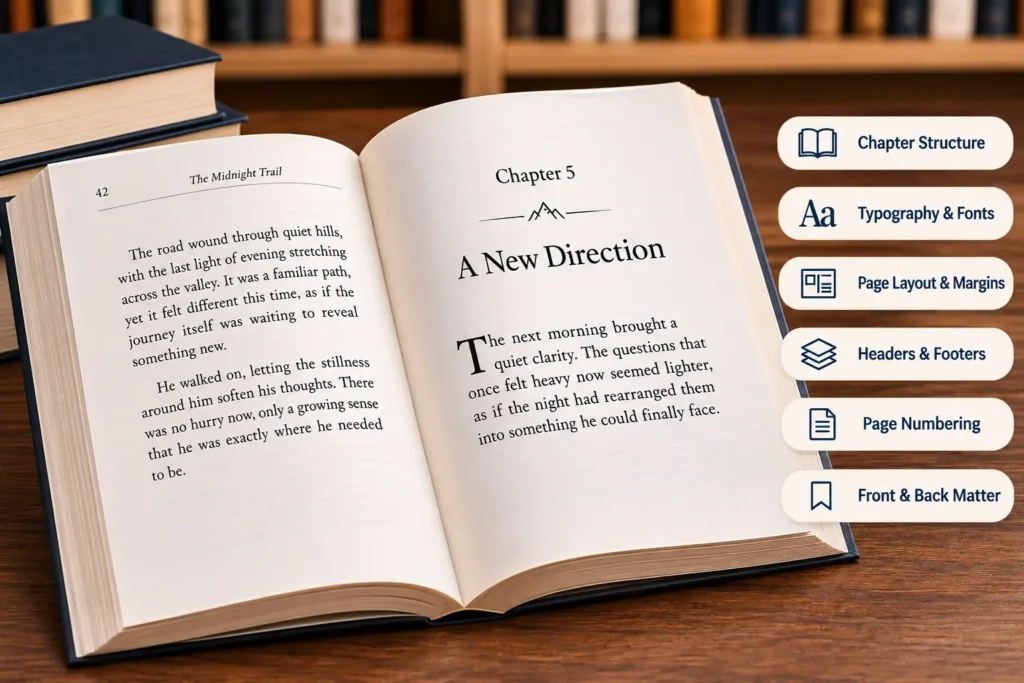
Consistency becomes particularly important in long-form content.
Chapter headings should follow the same structure, page numbering should remain consistent, and typography should be applied systematically throughout the manuscript.
Professional formatting can help turn a completed manuscript into a more organized book file.
Print Book and eBook Formatting Services
The formatting requirements can differ depending on whether a book is being prepared for print or digital reading.
Pretty Writer provides book formatting support to help authors prepare their manuscripts according to their intended publishing format.

Print Book Formatting
Print books require a carefully organized interior layout that supports comfortable reading and a consistent appearance across pages.
Print book formatting may involve:
- Page dimensions and trim size
- Margins and gutter spacing
- Chapter titles and section headings
- Font selection and typography
- Page numbering, headers and footers
- Front matter and back matter
- Consistent paragraph and line spacing
The final layout should be prepared according to the selected print specifications and publishing platform requirements.
Once your manuscript is formatted, explore our professional book printing services to prepare your book for physical production.
eBook Formatting
eBooks need a layout that works well across different digital reading devices and screen sizes.
eBook formatting may involve:
- Organizing chapters and sections
- Consistent headings and subheadings
- Readable typography and spacing
- Clickable table of contents, where supported
- Appropriate image placement
- Preparing files according to the selected platform’s requirements
A properly formatted eBook helps readers navigate the content comfortably across compatible devices.
Preparing Your Book for Publication
Whether you are publishing a paperback or an eBook, the formatting process should follow the technical requirements of your chosen publishing platform.
Pretty Writer can help authors prepare their book files for their intended publishing destination, including platforms such as Amazon KDP, Notion Press and Ingram, subject to the applicable format specifications.
Formatting Research Content
Research-based material often requires strict attention to structure and references.
The formatting may need to accommodate citations, references, tables, figures, headings, and other academic components.
A well-formatted research document allows readers to understand the organization of the material more easily.
It also helps present research in a professional and consistent manner.
Formatting Reports
Reports often contain multiple sections and information types.
A report may include:
- Executive summary
- Introduction
- Main sections
- Data
- Tables
- Findings
- Recommendations
- References
- Appendices
Formatting can help distinguish these sections and create a logical visual hierarchy.
When information is clearly organized, readers can locate important sections more easily.
The Importance of Consistency
One of the most important principles of formatting is consistency.
If one heading is bold and another is italicized without a clear reason, the document can appear disorganized.
Similarly, inconsistent spacing, font sizes, margins, or citation styles can reduce the professional appearance of the material.
A formatting review can check whether the same standards have been applied throughout the document.
Consistency can involve:
- Heading styles
- Font sizes
- Paragraph spacing
- Margins
- Page numbering
- Citation formats
- Lists
- Tables
- Chapter titles
Formatting Before Publishing
Formatting should generally be completed before the content is prepared for publication.
This helps ensure that the final version is organized and ready for its intended use.
Pretty Writer’s stated process includes final formatting before publishing. This means formatting is considered part of the final preparation rather than being ignored until the last moment.
A final formatting review can identify presentation issues before the material moves toward publication.
What Does Publishing Involve?
The requirements can vary depending on the project.
A book may require a publication-ready manuscript, while an article may need to be formatted for a specific platform or publication.
The publishing stage can therefore involve making sure the final content follows the relevant technical and presentation requirements.
Preparing Content According to Requirements
Different publishing projects may have different requirements.
Before formatting and publishing, it is useful to understand:
- Where the content will be published
- What file format is required
- What page dimensions are expected
- What formatting standards apply
- Whether citations are required
- How images or tables should be handled
- What additional front or back matter is needed
Understanding these requirements early can reduce unnecessary formatting changes later.
How Pretty Writer Helps with Formatting and Publishing
Pretty Writer provides formatting and publishing support for users who need assistance preparing their content.
The team can work with existing content or format material created through its writing services.
The process begins by understanding the user’s requirements and the intended formatting style.
The content can then be organized and formatted according to those requirements.
Pretty Writer’s support can be useful for users who have completed their writing but are unsure how to prepare it for professional presentation or publishing.
Support for Existing and New Content
A key benefit of formatting support is flexibility.
Users do not necessarily need to have their content written from the beginning.
If someone already has a manuscript, report, article, or other document, the content can be reviewed and formatted according to the desired requirements.
Similarly, content developed through writing services can go through a final formatting stage before publication.
This gives users options depending on where they are in their writing journey.
Why Professional Formatting Can Be Helpful
Formatting can take considerable time, especially for longer documents.
An author may understand their subject extremely well but may not be familiar with academic formatting, manuscript presentation, or publishing requirements.
Professional formatting support can reduce this burden.
Instead of spending hours adjusting headings, spacing, citations, page layouts, and other elements, users can focus on the content itself while the formatting is handled systematically.
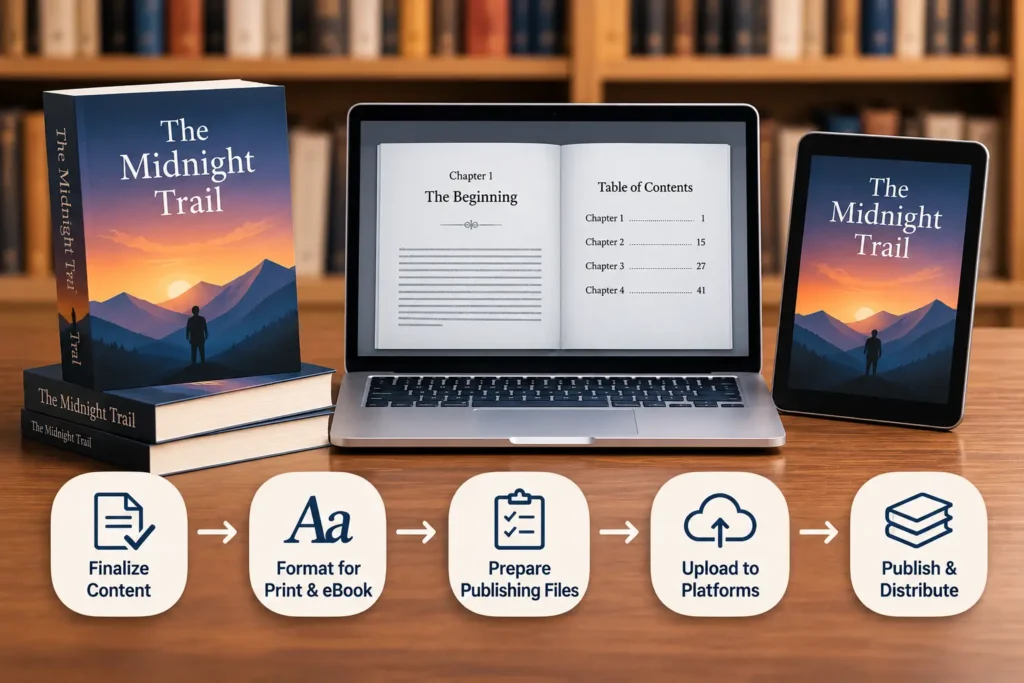
A Structured Formatting and Publishing Process
A structured approach can make the process easier to manage.
A typical workflow may include:
- Reviewing the content
- Understanding formatting requirements
- Identifying the intended publishing format
- Applying the appropriate structure
- Standardizing presentation
- Reviewing formatting consistency
- Making final adjustments
- Preparing the content for publishing
This approach helps ensure that important formatting details are not overlooked.
When Should You Consider Formatting and Publishing Support?
Professional Formatting and publishing support can be useful when:
- You have an existing manuscript that needs formatting.
- You need APA formatting.
- Your research document needs consistent presentation.
- Your book needs professional manuscript formatting.
- Your report needs better organization.
- You are preparing content for publication.
- You need formal or informal formatting.
- You want a final formatting review before publishing.
It can also be useful when you simply want professional assistance with the final presentation of your content.
Why Pretty Writer Can Be Helpful Compared with Handling Everything Alone
Pretty Writer supports users through both existing-content formatting and formatting of newly written material.
The process focuses on understanding the user’s requirements rather than applying one standard format to every project.
This can be particularly helpful because different documents require different presentation styles.
For example, academic content may need APA formatting, while a book or business document may require a different structure.
Pretty Writer’s team can work according to the requested format and prepare the content for the intended publishing requirements.
Ready to Format Your Book?
Tell us about your manuscript and publishing requirements. Let’s discuss the next steps.
Final Thoughts
Formatting and publishing are important final stages in transforming written content into a professionally presented product. Strong writing can lose some of its impact when the document is poorly organized or does not follow the appropriate formatting requirements.
Formatting provides structure through headings, typography, spacing, page layout, citations, references, chapters, and other presentation elements. Publishing then prepares the completed material for its intended audience and distribution.
Pretty Writer helps users with both existing and newly written content. Its team can understand formatting requirements, work with different styles including APA, formal, and informal formats, and complete final formatting before publishing.
Compared with managing every formatting detail independently, professional support can make the process more organized and less time-consuming. It also provides an opportunity to review the final presentation before the content reaches its intended audience.
Ultimately, Formatting and publishing are about more than making a document look attractive. They help ensure that information is organized, readable, consistent, and prepared according to the requirements of its intended use. With a structured approach to final formatting and publication preparation, authors and content creators can move from a completed draft toward a more polished and publication-ready result.